
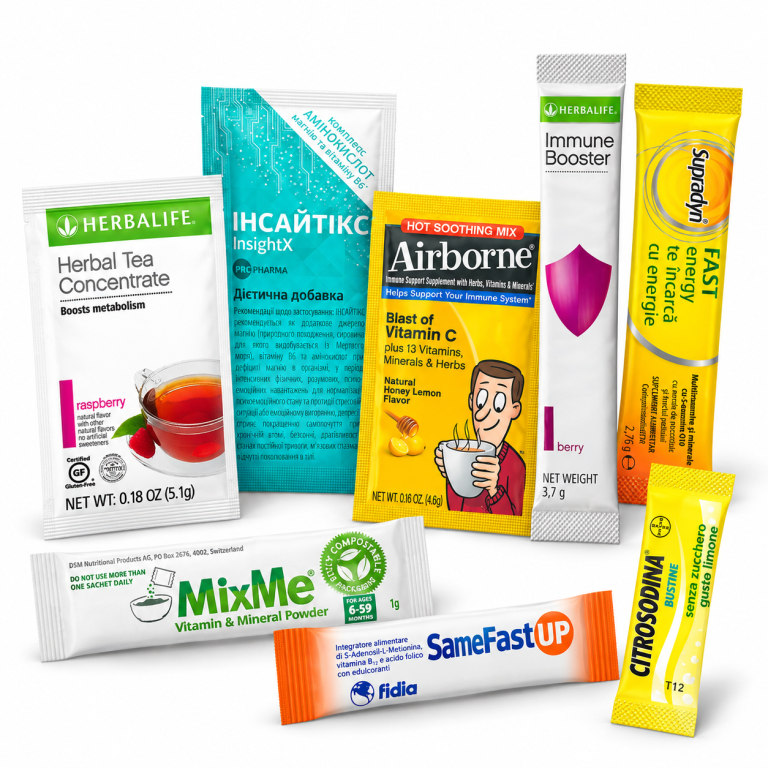
Whatever your production requirements, we have the packaging solution to match.


One product category, very different powder behaviours
Food supplement powders can combine vitamins, minerals, amino acids, proteins, plant extracts, carriers and functional ingredients. The machine configuration must therefore follow the physical behaviour of the finished blend, not simply its commercial category.

Match the dosing principle to the formulation
Control dust, adhesion and seal-area contamination
Build flexibility around changing formulations
What to expect
Our process for your success
Your Requirements
We analyze your product, pack format, production targets and specific requirements to identify the most suitable packaging solution.
Technical Evaluation
Our Area Manager and Project Manager assess dosing, materials, performance and line configuration to define a reliable and efficient solution.
Project Definition
Technical specifications, machine configuration and project requirements are clearly defined before development begins.
Engineering & Testing
Mechanical, electrical and software engineering are combined with product and material testing to validate real production performance.
FAT
Factory Acceptance Testing verifies machine performance, pack quality and compliance with the agreed technical specifications.
Installation & Training
Our technicians manage installation, SAT, start-up and operator training to ensure a smooth transition into production.
Lifecycle Support
Remote assistance, spare parts and technical expertise help maintain machine reliability, efficiency and uptime over time.
Consulting
We support production optimization, new products, materials and formats to keep your packaging solution ready for evolving requirements.
Why Universal Pack for food supplement powder packaging?
Universal Pack already packages a wide range of powdered food and vitamin supplements in stick packs and sachets, with real samples produced on its machines. The range includes equipment for both powders and free-flowing powders, as well as flexible-format and integrated cartoning configurations.
The key engineering principle is simple: the powder determines the machine configuration. Product and laminate can be analysed before final machine design so that dosing, sealing, cleaning and control systems reflect the actual formulation.
Auger or basculating dosing according to real flow behaviour
Universal Pack uses auger technology for non-free-flowing and sticky powders, with screw speed and rotations controlled according to the required dose. Free-flowing powders and granules can instead be evaluated with basculating dosing when natural product flow supports consistent volumetric filling.
Product and laminate tested before machine design
Universal Pack can analyse the customer’s formulation and packaging material internally before engineering the final configuration. Testing helps identify behaviour such as dusting, stickiness, moisture sensitivity and sealing interaction under representative conditions.
Design for access, cleaning and formula changes
Nutraceutical powders can require frequent product changes and strict control of product-contact areas. Universal Pack develops machines around accessibility, quick disassembly, cleaning operations and the hygiene requirements of the application.
Expand from primary packaging to automated cartoning
Stick pack and sachet production can be integrated with downstream counting and cartoning when the project requires an automated complete line. Universal Pack’s portfolio includes dedicated packaging lines for stick packs in pre-glued cartons.


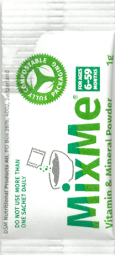
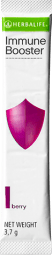

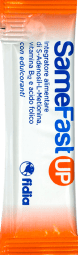
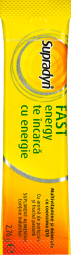
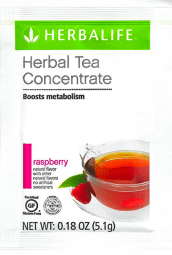

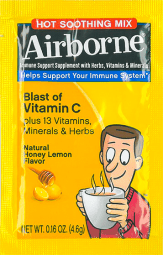
Examples of Food/Vitamin supplement Powder packages produced with Universal Pack machines.
Technical Project Assessment
A food supplement powder cannot be engineered from the ingredient list alone. The finished blend must be assessed for flow, density, particle distribution, environmental sensitivity and changeover requirements before the dosing and packaging architecture is defined.
| What we evaluate | Key project considerations |
|---|---|
| How does the finished supplement blend actually flow? | Flow behaviour determines the fundamental dosing approach. Cohesive or non-free-flowing blends are typically evaluated with auger dosing, while genuinely free-flowing formulations can be assessed for basculating volumetric dosing. |
| Which ingredients are driving the physical behaviour of the blend? | Proteins, minerals, extracts, amino acids, carriers and other components can affect cohesion, particle size, density and adhesion differently, so the complete formulation must be evaluated. |
| Does the powder bridge or compact inside the feeding system? | If bridging or compaction occurs, product feeding must maintain a sufficiently consistent condition around the dosing unit to avoid irregular delivery. |
| How much does bulk density vary between recipes or batches? | Bulk density determines the physical volume occupied by the target dose and can change both dosing behaviour and the pack dimensions required for different formulations. |
| Is the blend homogeneous or susceptible to segregation? | Ingredients with different particle sizes or densities can separate during handling, potentially changing the composition of individual portions. The stability of the actual blend should therefore be assessed. |
| Does the formulation create airborne dust during dosing? | Dust can increase product loss, machine deposits and contamination around the sealing area, so its behaviour influences filling conditions and any required extraction or containment measures. |
| Does the powder adhere to hoppers, dosing parts or forming components? | Sticky behaviour can reduce clean product discharge and increase cleaning frequency. Product-contact design and operating conditions should reflect the actual tendency to adhere. |
| Is static electricity affecting fine particles? | Electrostatically charged powders may cling to surfaces rather than following the intended filling path. Ionising systems can be evaluated where testing shows that static is materially affecting the process. |
| How sensitive is the formulation to ambient humidity? | Hygroscopic powders can absorb moisture, agglomerate or lose flowability during production, so environmental conditions and the required laminate barrier should be considered together. |
| Is any ingredient sensitive to heat during packaging? | If the formulation contains temperature-sensitive components, the sealing process and exposure conditions must be evaluated against the product’s actual stability requirements. |
| What relationship exists between serving weight and powder volume? | Target weight and bulk density define the physical volume entering the pack, which influences dosing-unit sizing and the minimum practical stick pack or sachet dimensions. |
| How different are the formulations planned for the same machine? | Large differences in flowability, density, dose or particle structure may require dedicated dosing settings, product-contact parts or changeover procedures for each SKU. |
| How frequently will formulations be changed? | Frequent recipe changes increase the importance of access, disassembly and cleaning time, especially where cross-contamination between functional ingredients must be controlled. |
| Which pack properties are required to protect the formulation? | Moisture, oxygen, light or other sensitivities determine the barrier requirements that the selected laminate must provide throughout the intended shelf life. |
| Which process controls are required after filling? | Depending on the project, weight verification, inspection, coding, reject management or downstream counting can be integrated into the packaging process. |
Faq
What is the best packaging machine for food supplement powders?
There is no single machine configuration for every supplement powder. The correct solution depends primarily on whether the finished blend is free-flowing or non-free-flowing, together with dose, bulk density, dust behaviour, pack format and required output.
Can the same machine package both free-flowing and non-free-flowing supplement powders?
Potentially, but the products may require different dosing technologies or machine configurations. The complete SKU range should therefore be reviewed before defining the required flexibility.
When is auger dosing used for powdered food supplements?
Auger dosing is used for powders that do not flow consistently under gravity, including cohesive, sticky or otherwise difficult formulations. Screw speed and rotations provide controlled product displacement during dosing.
When can basculating dosing be used for a food supplement powder?
Basculating dosing can be evaluated when the finished product behaves as a genuinely free-flowing powder or granule and can repeatedly fill a defined volumetric dose.
Can dusty nutraceutical powders be packaged in stick packs?
Yes, subject to application assessment. Dust formation affects product transfer, machine cleanliness and seal-area contamination, so the machine configuration should be developed around the behaviour of the actual powder.
What happens if a supplement powder is hygroscopic?
Exposure to humidity can cause some powders to agglomerate or lose flowability. Production conditions and packaging barrier therefore need to be evaluated together to maintain suitable product behaviour.
Can several food supplement formulations run on one packaging machine?
Yes, depending on how different the formulations are. Dose, flowability, density, dust level and cleaning requirements determine how much adjustment or dedicated equipment is required between recipes.
How do formula changes affect machine cleaning?
The impact depends on the ingredients and cross-contamination requirements. Frequent formulation changes make accessibility, removable product-contact parts and efficient cleaning procedures especially important.
Can food supplement powders be packed in both stick packs and sachets?
Yes. Universal Pack offers machines for both formats, including dedicated equipment for powders, free-flowing powders and flexible-format applications.
Can packaging materials be tested with the actual supplement powder?
Yes. Universal Pack can evaluate product and laminate together before final machine design, including their interaction during filling and sealing.
Which additional technologies can be used for difficult nutraceutical powders?
Depending on the application, options such as laminar flow, UV lamps, rotary or vibrating sieves and ionising bars can be evaluated as part of the machine configuration.
Can food supplement stick packs and sachets be automatically cartoned?
Yes. Universal Pack offers integrated primary and secondary packaging configurations, including lines for stick packs in cartons.

Looking for the right packaging solution for your process?
Describe your application and requirements. We’ll review your needs and get back to you with clear, relevant answers.
