
Whatever your production requirements, we have the packaging solution to match.


Built around the physical characteristics of black tea
Black tea is not a uniform dry product. Leaf grade, particle size, bulk density and the proportion of fines can change significantly between products and blends, directly influencing dosing behaviour and pack consistency.

Dosing matched to tea grade
Better control of fines and product handling
Packaging that helps preserve tea quality
What to expect
Our process for your success
Your Requirements
We analyze your product, pack format, production targets and specific requirements to identify the most suitable packaging solution.
Technical Evaluation
Our Area Manager and Project Manager assess dosing, materials, performance and line configuration to define a reliable and efficient solution.
Project Definition
Technical specifications, machine configuration and project requirements are clearly defined before development begins.
Engineering & Testing
Mechanical, electrical and software engineering are combined with product and material testing to validate real production performance.
FAT
Factory Acceptance Testing verifies machine performance, pack quality and compliance with the agreed technical specifications.
Installation & Training
Our technicians manage installation, SAT, start-up and operator training to ensure a smooth transition into production.
Lifecycle Support
Remote assistance, spare parts and technical expertise help maintain machine reliability, efficiency and uptime over time.
Consulting
We support production optimization, new products, materials and formats to keep your packaging solution ready for evolving requirements.
Why Universal Pack for black tea packaging?
Packaging black tea consistently means understanding what is actually moving through the machine. A broken-leaf tea, a fine CTC grade and a dust-rich blend can behave very differently even when the target pack weight is identical.
The machine configuration therefore starts with the physical characteristics of the tea and the required finished pack, not simply with a nominal dose.
Dosing developed around tea grade and density
Particle dimensions, bulk density, flow behaviour and fines content are evaluated to define a dosing solution suitable for the actual black tea and required portion.
Testing with the real tea product
Product trials can help assess filling behaviour, dose consistency and pack formation using the customer’s actual tea rather than relying solely on theoretical product specifications.
Multilane technology for industrial tea packaging
Multiple sachets or stick packs can be formed, dosed and sealed simultaneously, with machine configuration defined around pack dimensions, target dose and sustained production requirements.
Product protection beyond accurate dosing
Packaging performance continues after the pack leaves the machine. Laminate characteristics, sealing and storage requirements are evaluated to help protect black tea against moisture ingress and preserve its sensory characteristics throughout the required shelf life.

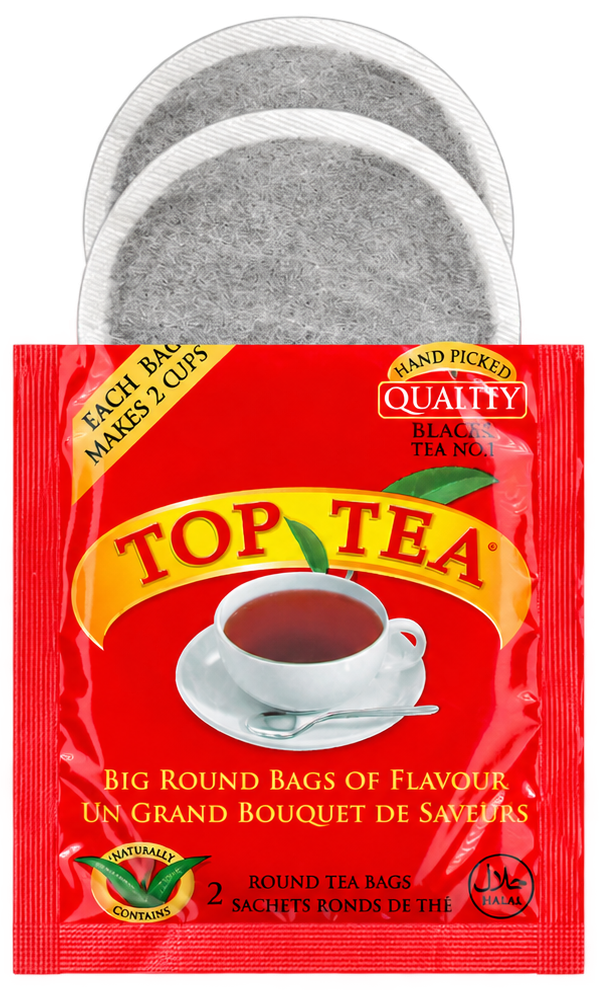

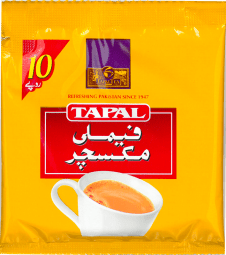


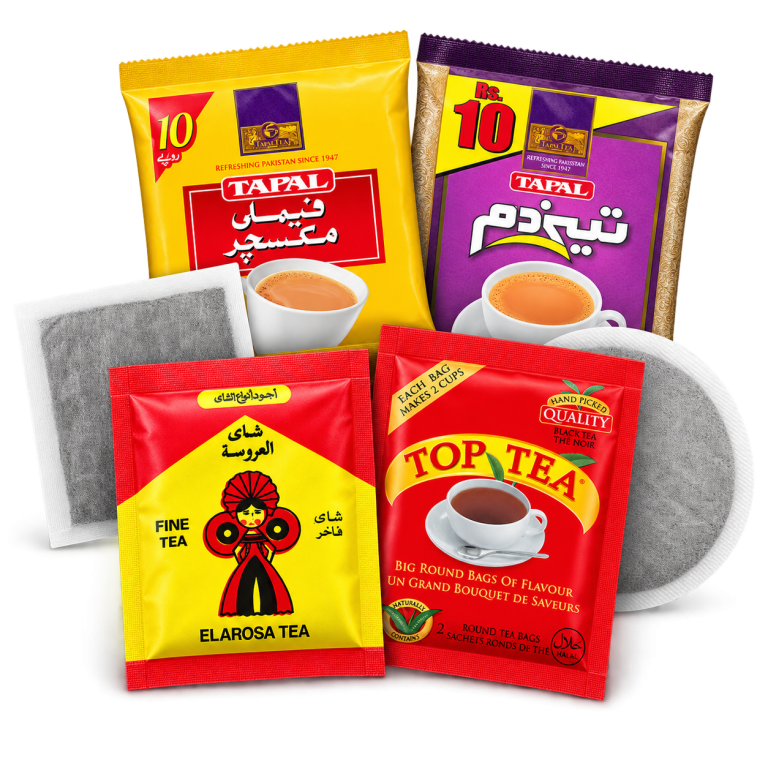
Examples of Black Tea packages produced with Universal Pack machines.
Technical Project Assessment
Black tea grade, particle size distribution, bulk density, fines content, target dose and packaging material all influence the correct machine configuration. Evaluating the real product from the start helps define the dosing technology, pack format and operating conditions required for consistent production.
| What we evaluate | Key project considerations |
|---|---|
| Which type and grade of black tea will be packaged? | Whole leaf, broken leaf, fannings, dust and CTC grades can have very different physical characteristics. The actual grade is evaluated to define the appropriate product handling and dosing configuration. |
| What is the particle size distribution? | The dimensions and distribution of leaves, broken particles and fines influence product flow, dosing behaviour and the volume required for a given target weight. |
| How consistent is the bulk density? | Changes in bulk density can affect the relationship between product volume and pack weight. Density therefore needs to be considered together with dose tolerance and the selected dosing technology. |
| How does the tea flow during feeding and dosing? | Flowability, particle shape and the interaction between different tea fractions are assessed to identify any tendency towards inconsistent feeding, bridging or irregular dosing. |
| How much tea dust or fines are present? | A high proportion of fine particles can influence product handling and cleanliness around the filling area. Dust content is therefore considered when defining the feeding and dosing process. |
| How should unnecessary leaf breakage be limited? | Product transfer, feeding and dosing conditions are evaluated according to the structure of the tea to avoid introducing unnecessary mechanical stress, particularly when larger leaf grades are being packed. |
| What dose and filling tolerance are required? | Target weight, acceptable tolerance, tea density and pack dimensions are evaluated together to define the most appropriate dosing range and machine configuration. |
| Is the product pure black tea or a blend? | Blended teas may combine different leaf grades, flavours, botanicals or other ingredients. Their particle distribution and potential for separation should be considered when assessing product feeding and dosing. |
| How sensitive is the tea to ambient humidity? | Black tea can absorb moisture during handling and storage. Environmental conditions, production campaign duration and packaging barrier requirements are therefore considered as part of the application. |
| Which pack format is most suitable? | Sachet or stick pack dimensions, target dose, opening system, intended use and required pack volume are considered when defining the finished format and machine configuration. |
| Which packaging material will be used? | Laminate structure, moisture barrier, oxygen barrier, sealability, mechanical properties and required shelf life are evaluated to support both machinability and product protection. |
| What shelf life and storage conditions are required? | Humidity, oxygen and light exposure during distribution and storage can influence tea quality and aroma over time. The required protection level is therefore considered when evaluating the packaging structure. |
| What production output is required? | Required sustained output, batch size, operating shifts and production campaign duration help determine the appropriate number of lanes, machine configuration and level of automation. |
| How many tea grades, blends and pack sizes will be produced? | Differences in leaf size, density, composition, dose and pack dimensions can require different machine settings. The number of SKUs and expected changeover frequency therefore influence the required flexibility. |
| What cleaning and cross-contamination requirements must be considered? | Cleaning frequency, product changeovers, flavoured blends and the possible presence of additional ingredients are assessed to define the appropriate access and cleaning strategy. |
| Which quality controls are required? | Coding, vision inspection, weight control, reject systems, traceability and production data management can be integrated according to the required level of process control. |
| Is secondary packaging part of the project? | Counting, grouping, transfer and cartoning requirements are evaluated when black tea sachets or stick packs need to be integrated directly into a complete automated packaging line. |
Faq
What types of black tea can be packaged?
Different black tea grades can potentially be processed, including whole or broken leaf, fannings, dust and CTC products. The final dosing configuration depends on particle size, density, flow behaviour and required dose.
Which dosing system is suitable for black tea?
There is no single dosing solution for every tea grade. Product particle size, bulk density, flowability, fines content and target weight should be assessed before defining the filling technology.
Can the same machine package whole-leaf tea and tea dust?
Potentially, but the two products behave very differently. A significant change in particle size, density or flow characteristics may require different machine settings or dedicated dosing components.
Can CTC black tea be packaged on a multilane machine?
Yes, depending on the specific grade and application. CTC products range from larger broken particles to fine fannings and dust, so the actual tea should be evaluated before confirming the configuration.
How does bulk density affect black tea dosing?
Bulk density determines how much volume is occupied by a given weight of tea. Changes in density can therefore affect dosing behaviour, pack volume and the consistency of portion weights.
How do you manage tea dust during packaging?
The amount of dust and fines is evaluated as part of the product assessment. Feeding, dosing and machine configuration can then be defined to maintain controlled product handling and reduce unnecessary dispersion around the filling area.
Can black tea blends with flavours or botanicals be packaged?
Potentially, yes. The dimensions, density and concentration of additional ingredients should be evaluated because mixed products can behave differently during feeding and may be more prone to segregation.
Which packaging materials are suitable for black tea?
The laminate should provide suitable machinability, sealability and the required protection against moisture and other environmental factors. The final structure depends on shelf-life, storage and distribution requirements.
Why is moisture protection important for black tea?
Tea is hygroscopic and can absorb moisture from the surrounding environment. Appropriate packaging barrier and sealing performance help maintain the conditions required for product stability during storage.
Can different black tea SKUs run on the same machine?
Potentially, yes. The feasibility depends on differences in tea grade, particle size, bulk density, dose and pack format and on whether those products fall within the machine’s validated operating range.
Can sustainable packaging materials be tested for black tea?
Yes. Alternative flexible packaging structures can be evaluated through dedicated trials to assess machinability, sealing behaviour and the barrier performance required for the application.
Can black tea sachet machines be integrated with cartoning systems?
Yes. Primary packaging can be combined with coding, inspection, counting, handling and cartoning technologies when a complete automated black tea packaging line is required.

Looking for the right packaging solution for your process?
Describe your application and requirements. We’ll review your needs and get back to you with clear, relevant answers.
