
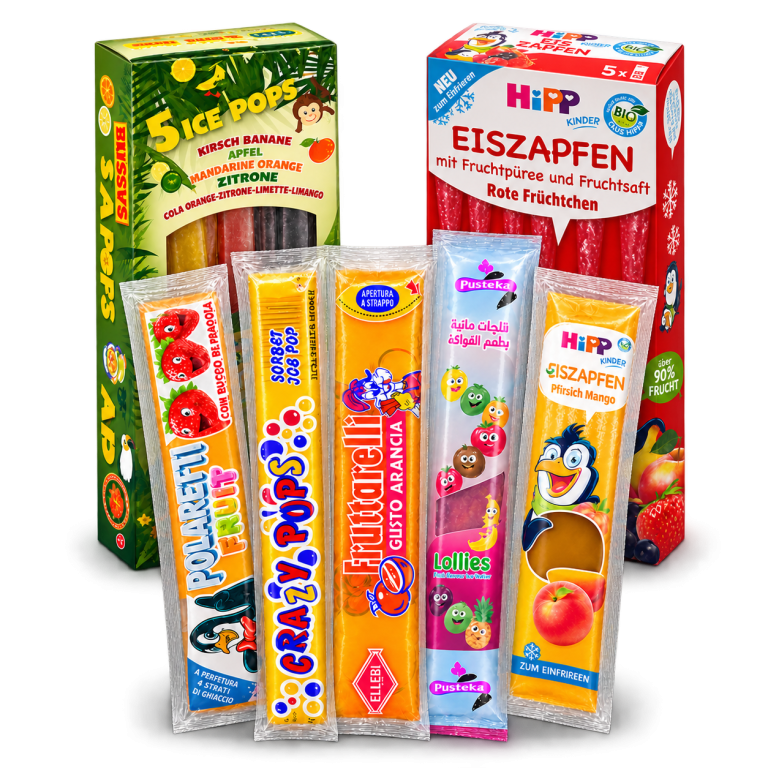
Whatever your production requirements, we have the packaging solution to match.


Engineered for the complete fill-to-freeze process
A liquid ice lolly must first run efficiently on the packaging machine and then remain reliable when the filled pack is handled, chilled or frozen. The right solution therefore goes beyond liquid dosing alone.

Choose the dosing technology around the recipe
Protect the seal before and after freezing
Build the machine around the final ice lolly
What to expect
Our process for your success
Your Requirements
We analyze your product, pack format, production targets and specific requirements to identify the most suitable packaging solution.
Technical Evaluation
Our Area Manager and Project Manager assess dosing, materials, performance and line configuration to define a reliable and efficient solution.
Project Definition
Technical specifications, machine configuration and project requirements are clearly defined before development begins.
Engineering & Testing
Mechanical, electrical and software engineering are combined with product and material testing to validate real production performance.
FAT
Factory Acceptance Testing verifies machine performance, pack quality and compliance with the agreed technical specifications.
Installation & Training
Our technicians manage installation, SAT, start-up and operator training to ensure a smooth transition into production.
Lifecycle Support
Remote assistance, spare parts and technical expertise help maintain machine reliability, efficiency and uptime over time.
Consulting
We support production optimization, new products, materials and formats to keep your packaging solution ready for evolving requirements.
Why Universal Pack for liquid ice lolly packaging?
Liquid ice lolly is not only a theoretical application within our liquid portfolio. Multiple ice lolly packs are already represented among the product samples produced with Universal Pack sachet technology.
That direct application experience allows the project to start from the real interaction between product flow, dosing, sachet formation and sealing rather than from a generic liquid-packaging specification.
Three dosing approaches, selected around the application
Depending on the formulation and project requirements, liquid ice lollies can be dosed using gravimetric systems, flowmeters or traditional piston pumps. This allows the dosing concept to be selected around product behaviour, target dose, required accuracy and production conditions rather than forcing every application into the same technology.
Piston pumps for controlled volumetric dosing
The piston pump provides positive-displacement volumetric dosing, making it a proven solution when repeatable portions and direct control over the delivered volume are priorities. Stroke and filling parameters can be defined around the required dose, while the controlled filling cycle can also support clean product handling.
Nozzles and cleaning developed around the recipe
The dosing nozzle and cleaning procedure are defined according to the actual product and selected dosing technology. Where the application requires it, machine configurations can also incorporate CIP or COP concepts to support the required hygiene and changeover strategy.
From multilane filling to counted cartons
Several Liquid Ice Lolly sachets can be formed, filled and sealed simultaneously. When secondary packaging is required, the machine can also be integrated with counting, stacking and cartoning technology to create a complete line from liquid filling to grouped finished packs.
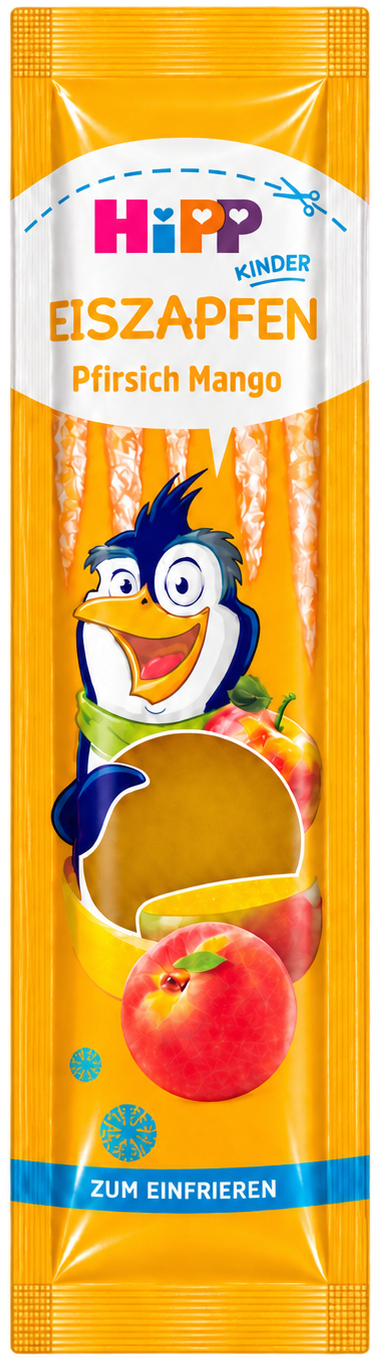
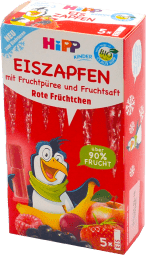
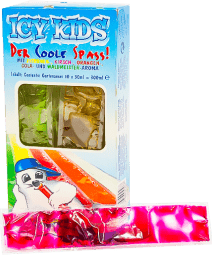


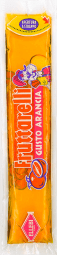

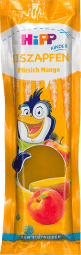
Examples of Liquid Ice Lolly packages produced with Universal Pack machines.
Technical Project Assessment
Liquid ice lolly formulation, density, dose, sachet geometry, filling conditions and the way the finished pack will be frozen all influence the final machine configuration. These parameters are evaluated together to select the most appropriate dosing technology, filling conditions, laminate and downstream process.
| What we evaluate | Key project considerations |
|---|---|
| What type of liquid ice lolly formulation will be packaged? | Water-based, juice-based, syrup-based and other formulations can differ in sugar content, density, viscosity and flow behaviour. The actual recipe is evaluated before defining the dosing and filling configuration. |
| Which dosing technology is most suitable for the application? | Gravimetric dosing, flowmeters and piston pumps can be evaluated according to product characteristics, target dose, required accuracy and process conditions. The dosing principle is selected around the application rather than standardised across every liquid product. |
| When is a piston pump particularly suitable? | A piston pump provides positive-displacement volumetric dosing and direct control over the delivered volume. It can be particularly valuable when repeatable portions, controlled filling cycles and flexibility across the required dose range are important project requirements. |
| How does the product behave during filling? | Viscosity, density and flow behaviour under real production conditions are considered to define the appropriate dosing technology, filling time and nozzle configuration. |
| What sugar concentration or product density must be considered? | Changes in formulation can alter density and the relationship between product volume and weight. This is particularly relevant when different flavours or recipes are expected to run on the same machine. |
| At what temperature will the product be filled? | The actual filling temperature is considered because it can influence product characteristics, dosing behaviour and the conditions under which the sachet is formed and sealed. |
| Does the formulation generate foam or retain air? | Foaming or entrained air can affect fill level and dosing repeatability. Filling conditions and nozzle positioning are assessed when this behaviour is present in the actual product. |
| Does the product contain juice pulp or suspended ingredients? | The type, dimensions and concentration of any suspended material are evaluated to verify compatibility with the selected dosing system, valves and filling nozzles. |
| What dose and filling tolerance are required? | Target quantity, allowable tolerance, product density and sachet dimensions are considered together when defining the dosing range and operating parameters. |
| How much headspace is required before freezing? | If the product is frozen after filling, fill level and available pack volume need to be validated against the behaviour of the actual formulation during freezing and subsequent handling. |
| What sachet dimensions and shape are required? | Liquid ice lollies often use long, narrow formats. Sachet width, length, dose, opening concept and finished-pack proportions are therefore evaluated together when defining the machine configuration. |
| Which packaging material will be used? | Film structure, sealability, mechanical properties and compatibility with the filling process are evaluated together with the required sachet geometry and production conditions. |
| Will the filled sachet be frozen after packaging? | When freezing occurs downstream, the laminate and seals should be assessed under the expected low-temperature conditions to confirm that the finished package remains suitable for handling and distribution. |
| How should the sealing area be kept free from liquid? | Dosing timing, liquid shut-off, nozzle position and filling level are configured according to the selected dosing technology to reduce the risk of product reaching the sealing surfaces before the pack is closed. |
| How many flavours, colours and pack formats will be produced? | Recipe changes can affect density and filling behaviour, while different sachet dimensions can require format adjustments. SKU range and expected changeover frequency are therefore considered from the beginning of the project. |
| What cleaning strategy is required between flavours? | Product-contact parts, dosing-system design, nozzle configuration, cleaning frequency and changeover procedures are evaluated according to the formulations being processed. CIP or COP concepts can be considered where required by the application. |
| What production and secondary packaging process is required? | Sustained output, number of lanes, pack orientation, counting, grouping and cartoning requirements are assessed together when the project extends from primary packaging to a complete automated line. |
Faq
What is a liquid ice lolly packaging machine?
It is a form-fill-seal machine that doses the ice lolly mixture while it is still liquid, forms the flexible pack and seals it before the product is subsequently chilled or frozen according to the customer’s process.
Which dosing systems can be used for liquid ice lollies?
Depending on the formulation and project requirements, Universal Pack can evaluate gravimetric dosing, flowmeters and traditional piston pumps. The selection depends on product behaviour, target dose, required accuracy and production conditions.
What are the advantages of a piston pump for liquid ice lolly filling?
A piston pump uses positive displacement to deliver a defined volume during each dosing cycle. This provides direct volumetric control and good repeatability, while stroke and filling parameters can be adapted to the required dose range.
Is a piston pump better than a flowmeter or gravimetric dosing system?
Not necessarily. Each technology has different advantages. The correct choice depends on formulation, dose, accuracy requirements, production conditions and the customer’s preferred process architecture.
Does the Universal Pack machine freeze the ice lolly?
No. The packaging machine forms, fills and seals the liquid product. Freezing is a separate downstream or distribution-stage process defined by the customer’s production model.
Can long ice lolly sachets be produced?
Yes, subject to the required format and machine configuration. Sachet width, length, dose and laminate are evaluated together during the technical assessment.
How is headspace managed when the ice lolly will be frozen?
The target fill level and available pack volume should be validated with the actual formulation and expected freezing conditions. This is considered during application assessment rather than using one fixed value for every recipe.
Can several ice lolly flavours run on the same machine?
Potentially, yes. Differences in density, sugar content, colour, viscosity, suspended ingredients and dose are evaluated together with the required cleaning and recipe-change procedure.
Can liquid ice lollies containing fruit juice or pulp be packaged?
Potentially. Juice-based formulations can be assessed, while pulp or other suspended ingredients require evaluation of particle size and concentration as well as compatibility with the selected dosing technology.
Which packaging films can be used for liquid ice lollies?
Film selection depends on sealability, mechanical performance, sachet geometry, production conditions and the way the pack will be frozen and handled. The laminate should therefore be evaluated as part of the complete application.
How do you prevent liquid from entering the sealing area?
Controlled dosing, product shut-off, nozzle positioning and the correct filling level help stop product flow before sealing. The exact solution depends on the selected dosing technology and actual product behaviour.
Can liquid ice lolly sachets be automatically counted and cartoned?
Yes. Universal Pack can integrate the sachet machine with counting, stacking and cartoning technology when the finished packs need to be grouped automatically into secondary packaging.

Looking for the right packaging solution for your process?
Describe your application and requirements. We’ll review your needs and get back to you with clear, relevant answers.
