
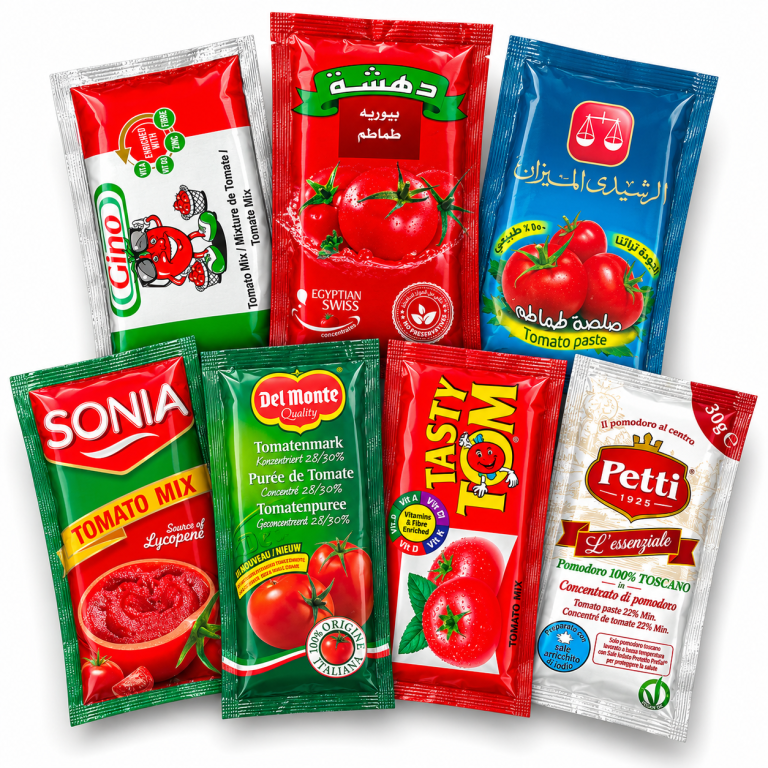
Whatever your production requirements, we have the packaging solution to match.


Designed for dense and concentrated tomato products
Tomato paste combines high product concentration with demanding filling conditions. Reliable packaging starts with controlling how the product moves through the dosing system, enters the pack and separates cleanly at the end of each cycle.

Stable dosing for high-viscosity products
Clean cut-off, cleaner sealing areas
Built around your process conditions
What to expect
Our process for your success
Your Requirements
We analyze your product, pack format, production targets and specific requirements to identify the most suitable packaging solution.
Technical Evaluation
Our Area Manager and Project Manager assess dosing, materials, performance and line configuration to define a reliable and efficient solution.
Project Definition
Technical specifications, machine configuration and project requirements are clearly defined before development begins.
Engineering & Testing
Mechanical, electrical and software engineering are combined with product and material testing to validate real production performance.
FAT
Factory Acceptance Testing verifies machine performance, pack quality and compliance with the agreed technical specifications.
Installation & Training
Our technicians manage installation, SAT, start-up and operator training to ensure a smooth transition into production.
Lifecycle Support
Remote assistance, spare parts and technical expertise help maintain machine reliability, efficiency and uptime over time.
Consulting
We support production optimization, new products, materials and formats to keep your packaging solution ready for evolving requirements.
Why Universal Pack for tomato paste packaging?
Tomato paste packaging is a balance between product control and industrial productivity. High concentration and viscosity influence product feeding, dosing and cut-off, while filling temperature, packaging material and sealing conditions can directly affect finished-pack quality.
Universal Pack evaluates these variables together before defining the final machine configuration, developing tomato paste stick pack and sachet machines around the actual product and production requirements.
Dosing developed around the actual paste
The filling system is configured according to the real concentration, consistency, temperature and target dose of the tomato paste rather than relying on a standard liquid-filling approach. Product behaviour is evaluated to define the most suitable dosing circuit, filling parameters and nozzle configuration.
Product and laminate tested together
The interaction between tomato paste, dosing technology and flexible packaging material is critical to reliable production. When required, trials with the actual product and laminate can be used to assess filling behaviour, product cut-off, pack formation and sealing performance before the industrial solution is finalised.
Multilane technology for scalable output
Universal Pack multilane technology allows multiple tomato paste stick packs or sachets to be formed, filled and sealed simultaneously. The number of lanes and machine configuration are defined according to dose, pack dimensions, product characteristics and required sustained output.
Complete packaging lines when the process goes further
When primary packaging is only one stage of the production process, coding, inspection, handling, counting and secondary packaging technologies can be integrated into a complete automated line. Technical support, spare parts and ongoing product and material testing continue throughout the machine lifecycle.

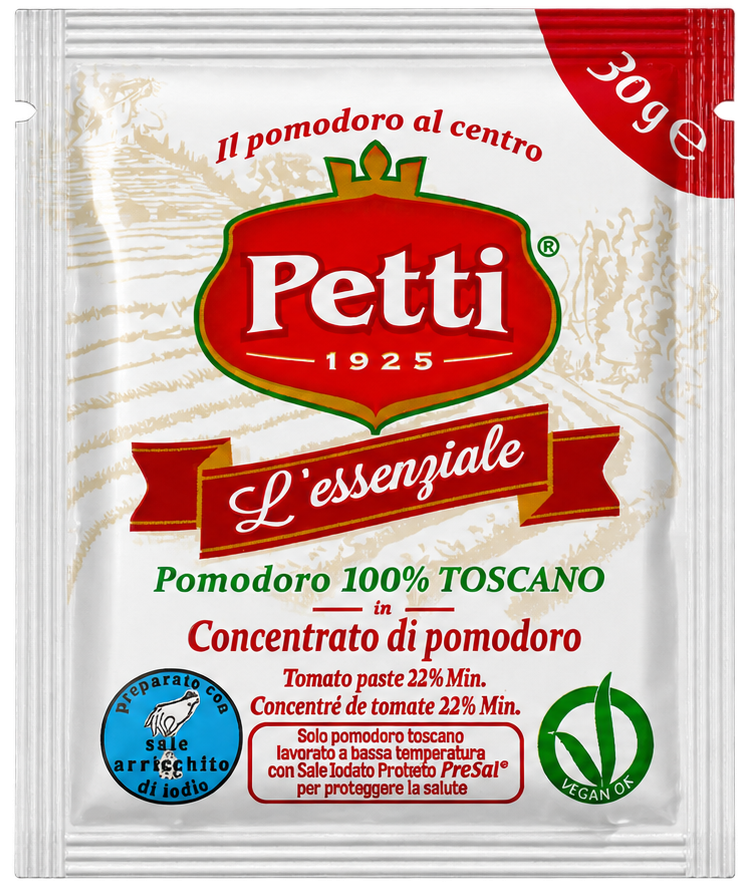
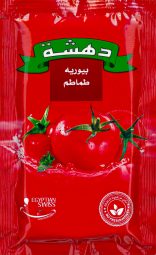

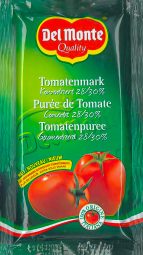
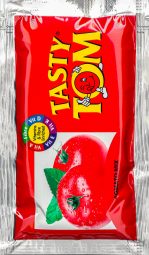
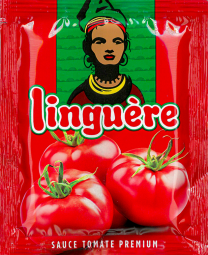
Examples of Tomato Paste packages produced with Universal Pack machines.
Technical Project Assessment
Tomato paste concentration, viscosity, filling temperature, dose, packaging material and required output all influence the final machine configuration. A focused technical assessment helps define the most suitable dosing, pack format and production setup.
| What we evaluate | Key project considerations |
|---|---|
| How does the tomato paste behave during filling? | Viscosity, consistency, flow behaviour and possible variations during production are evaluated to define the most suitable dosing system, product circuit and filling conditions. |
| What concentration of tomato paste will be packaged? | Product concentration and total solids can significantly influence consistency and flow behaviour. These parameters are considered when sizing the dosing system and defining the operating range of the machine. |
| At what temperature will the tomato paste be filled? | Filling temperature can influence viscosity, flow behaviour, dosing accuracy and product cut-off. Ambient, warm or hot filling conditions are therefore considered from the beginning of the project. |
| What dose and filling accuracy are required? | Target dose, acceptable tolerance, pack dimensions and product behaviour are assessed together to achieve repeatable filling throughout the production run. |
| How can product tails and dripping be controlled? | Nozzle design, dosing timing and product cut-off are evaluated according to the consistency of the tomato paste to reduce stringing, dripping and unnecessary product residues around the filling area. |
| How should the sealing area be protected from product contamination? | Filling position, dosing control and product cut-off are defined to minimise the risk of tomato paste entering the sealing area and to support consistent pack integrity. |
| Does the product contain seeds, fibres or other particulates? | The type, size and concentration of any suspended solids are assessed to verify compatibility with the product circuit, valves and filling nozzles and to maintain reliable dosing performance. |
| Which pack format is most suitable? | Stick pack or sachet dimensions, dose volume, opening system, consumer use and branding requirements are considered when defining the pack format and machine configuration. |
| Which packaging material will be used? | Laminate structure, sealability, mechanical resistance, barrier properties and compatibility with the product and filling temperature are evaluated to ensure reliable processing and final pack performance. |
| What shelf life and storage conditions are required? | Target shelf life, storage conditions and product-protection requirements are considered together with the packaging material and filling process when defining the complete application. |
| What production output is required? | Required sustained output, batch size, operating shifts and production campaign duration help determine the appropriate number of lanes, machine speed and level of automation. |
| How many tomato paste recipes and pack sizes will be produced? | Different products may vary in concentration, viscosity, ingredients, dose or filling temperature. The number of SKUs and expected changeover frequency influence machine flexibility and format-change requirements. |
| What cleaning requirements must be considered? | Cleaning frequency, accessibility of product-contact parts, production campaign length and changes between different formulations are evaluated to define the most appropriate cleaning concept for the application. |
| Which quality controls are required? | Coding, vision inspection, weight control, reject systems, traceability and production data management can be integrated according to the required level of process control. |
| Is secondary packaging part of the project? | Counting, grouping, transfer and cartoning requirements are considered when tomato paste stick packs or sachets need to be integrated into a complete packaging line rather than produced as loose single packs. |
Faq
Can tomato paste be packed in both sachets and stick packs?
Yes. Both formats can be evaluated for single-dose tomato paste packaging. The choice depends on the required dose, consumer use, opening system, packaging material, desired pack proportions and production targets.
Which dosing system is suitable for tomato paste?
The dosing system is selected according to the actual viscosity, concentration, filling temperature, target dose and other product characteristics. These parameters are evaluated together before defining the most appropriate product circuit and filling configuration.
Can highly concentrated tomato paste be packaged?
Yes, depending on its characteristics. Higher product concentration can significantly affect viscosity and filling behaviour, so the actual tomato paste should be evaluated before the dosing system and production parameters are finalised.
Can tomato paste be filled hot?
Warm or hot filling applications can be evaluated. The required filling temperature must be considered together with product behaviour, dosing technology, packaging material, sealing conditions and required production performance before the final machine configuration is defined.
How do you control product stringing when filling tomato paste?
Product cut-off depends on the behaviour of the paste as well as nozzle geometry, dosing timing and filling parameters. These elements are configured together to reduce product tails, dripping and unnecessary residues around the filling area.
How do you prevent tomato paste from contaminating the sealing area?
Controlled filling, accurate positioning and clean product cut-off help reduce the risk of tomato paste reaching the sealing area. Dosing and sealing conditions are evaluated together to support consistent finished-pack quality.
Can different tomato paste concentrations run on the same machine?
Potentially, yes. Feasibility depends on the differences in viscosity, concentration, filling temperature, required dose and pack format between the products. These parameters are evaluated when defining the operating range and changeover requirements of the machine.
Which packaging films are suitable for tomato paste?
There is no single laminate suitable for every tomato paste application. Sealability, barrier properties, mechanical resistance, product compatibility, filling temperature and targeted shelf life should all be considered when selecting the packaging material.
Can tomato paste containing seeds or fibres be packaged?
Potentially, yes. The type, dimensions and concentration of seeds, fibres or other particulates must first be evaluated to verify compatibility with the dosing circuit, valves and filling nozzles and to maintain consistent dosing performance.
How is a tomato paste packaging machine cleaned?
The cleaning concept depends on the product formulation, production campaign length, changeover frequency and customer hygiene requirements. Accessibility and product-contact components are considered during project engineering to define the most appropriate solution.
Can sustainable packaging materials be tested for tomato paste?
Yes. Alternative flexible packaging structures can be evaluated through dedicated trials to assess machinability, sealing behaviour and compatibility with the tomato paste, filling conditions and required pack performance.
Can tomato paste packaging be integrated with cartoning?
Yes. Tomato paste stick pack and sachet machines can be integrated with coding, inspection, handling, counting and cartoning technologies to create a complete automated packaging line according to the required production flow.

Looking for the right packaging solution for your process?
Describe your application and requirements. We’ll review your needs and get back to you with clear, relevant answers.
